Shift Into Shopify - Migration

Move to Shopify From Any Platform — Or Get More Out of the Shopify You Already Have
Whether you’re running WooCommerce, Magento, BigCommerce, a self-hosted NopCommerce build, or something homegrown, you already know the drill: your own servers, your own SSL renewals, your own security patches, and a developer on standby for anything beyond a content change.
At Dogs of Design, we specialize in platform-to-Shopify migrations — and in rebuilding Shopify stores that have outgrown their theme — without losing your product data, your fitment logic, your SEO rankings, or your sanity.

The Problem With Legacy Platforms

Legacy Means Self-Managed
Self-hosted or not, most legacy platforms leave the hosting, the SSL renewals, the runtime updates, and every security patch in your hands. Skip one, and you’re the one exposed — not a platform vendor with a security team on staff.
Built for Developers, Not Marketers

Running most legacy platforms well requires a dev team fluent in whatever framework they were built on, comfortable managing databases and server infrastructure. Simple content changes routinely need a developer, and legacy CMS tools are famously basic for anything beyond a product page.

The Case For Shopify

Ultimately, Shopify lets you focus on selling instead of servers. Hosting, security, PCI compliance, and uptime are handled for you — on infrastructure built to survive a product drop, not just a slow Tuesday. Your team gains independence too: content and product updates happen in minutes, not developer tickets.
Fully Managed, Always Secure
PCI-DSS compliance, SSL, and uptime are Shopify’s job, not yours. No servers to patch, no renewals to remember.
Built to Scale With You
The largest app ecosystem in ecommerce, native fitment and PDM integrations, and infrastructure that handles enterprise traffic without a re-platform.

Stop Managing Software.
Start Selling Products.

Shopify leads the U.S. hosted-ecommerce market for a reason — and it’s not just market share.

Launch in Weeks, Not Quarters

No server provisioning, no environment setup — a migration timeline measured in weeks.

13,000+ Apps

The largest app ecosystem in ecommerce for fitment, subscriptions, POS, and B2B — no custom-coded workaround required.

Lower Total Cost of Ownership

No server bill, no dedicated developer on retainer just to keep the lights on.

Built for Every Channel

Online, in-store POS, B2B, and marketplaces from one back end.

We work across every industry — specialty retail, B2B distribution, industrial equipment. Automotive and powersports fitment happens to be one of our deepest specialties, proven at the scale of WARN Industries’ 996-product catalog below.

We Don’t Just Migrate Your Store.
We Migrate Your Data.

A migration — or a Shopify rebuild — is only as good as the product data behind it. Whether you’re running a PDM, PIM, or ERP system today, feeding Shopify from spreadsheets, or just need what’s already there restructured, here’s exactly how we handle it.
1
Audit Your Current Data
We start by auditing whatever system holds your product data today — a PDM, PIM, ERP, or a set of spreadsheets — mapping every field, relationship, and fitment rule before a single record moves.
2
Map to Shopify’s Schema
Tags, metafields, and metaobjects, structured to match how your team already thinks about your catalog — not flattened into a generic CSV that loses the relationships that made your data useful in the first place.
3
Build a Repeatable Pipeline
Matrixify-based import workflows so future catalog updates flow in on a schedule, not a one-time migration event that goes stale the day after launch.
4
Fitment & Y/M/M, Done Right
For catalogs where fit matters — automotive, powersports, industrial equipment — we’ve engineered custom Year/Make/Model logic integrated with Convermax, including cases every other agency called impossible.
CASE STUDY

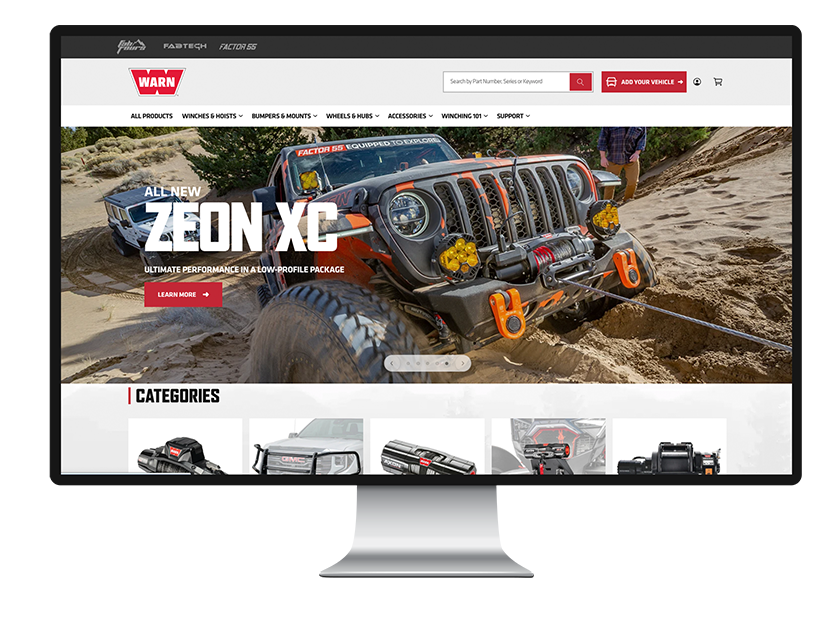
Proven on WARN Industries’ 996-Product Catalog

About WARN Industries

WARN Industries has been the name off-roaders trust for recovery gear since 1948 — winches, bumpers, hubs, and the accessories that turn a stock truck into a trail-ready rig. The company is headquartered in Clackamas, Oregon, and sells across four divisions: Truck/Jeep/SUV, Powersports, Industrial, and Utility.

Industry: Off-Road & Recovery Manufacturing
Founded: 1948
Engagement: Full Shopify platform rebuild, 3.5 months
Platform: Shopify — Alpha theme, heavily customized
Scope: Custom Liquid development, metaobject content architecture, PDM data integration, Convermax Y/M/M fitment engine, literature library, SEO migration

The Problem We Inherited

WARN came to us after another agency’s attempt to get them off NopCommerce and onto Shopify stalled out. NopCommerce’s headaches were part of what pushed WARN to make the move in the first place — but that engagement never got past design concepts and ideas, with no actual build to show for it. We started from scratch: migration, redesign, architecture, all of it. The legacy site wasn’t just dated — it was actively working against the business. WARN’s own team couldn’t make a routine content update without filing a developer ticket. The mobile experience was an afterthought bolted onto a desktop-first build, and checkout — the one page that actually makes the business money — looked bargain-bin, nothing close to the premium off-road brand WARN had built everywhere else.

A Rebuild That Stalled

The previous agency’s attempt never made it to launch. We took ownership and delivered a fully functional, scalable Shopify site from the ground up.

500+ PDFs, Hardcoded

Every install guide and parts list lived inside page HTML, sometimes in three places at once.

60+ Pages, No System

Comparison pages were scattered across four divisions with no consistent structure or logic.

“That’s Impossible on Shopify”

Every agency WARN talked to said true Year/Make/Model fitment couldn’t be built natively. We didn’t believe them.

The Solution We Delivered

We started from scratch: a full Shopify migration, a ground-up redesign, and a custom fitment engine built to handle what other agencies called impossible.

A Rebuild That Shipped

We took ownership from day one and delivered a fully functional, scalable Shopify site — migration, redesign, and fitment engine, in 3.5 months.

500+ PDFs, One Library

Every install guide and parts list now lives in a single literature system, fed automatically to every page that needs it.

15 Pages, One System

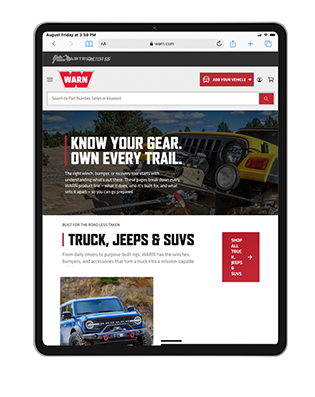
One reusable metaobject now powers every “Know Your Gear” comparison page across all four divisions.

Impossible? We Built It.

A custom Year/Make/Model fitment engine, built from scratch and integrated with Convermax — the thing every other agency said couldn’t be done.

What We Built.

A metaobject-driven content architecture replaced hand-coded pages across the board: 15 “Know Your Gear” comparison pages powered by a single reusable metaobject, a literature library built from one source of truth, and a guided-navigation system that walks customers through complex builds instead of dumping them into a link list.

A Paper Trail That Finally Makes Sense

500+ install guides, operator’s manuals, replacement-parts lists, catalogs, and warranties — all stored once and fed automatically to every place they’re needed. Try the search below.

Twelve Chapters. One Interactive Guide.

The Basic Guide to Winching used to be scattered across 11 separate pages. We rebuilt it as a single page with a sticky table of contents and hash-based deep links. Click a chapter below.
Basic Guide to Winching — WARN Industries (portfolio sample)
Truck, Jeep & SUV

Basic Guide to Winching

A working excerpt from the full guide we built for warn.com — sticky navigation, collapsible chapters, real content throughout.

2
Symbol Index
▾

The following symbols appear throughout this guide. Learn them before operating your winch.

Showing 6 of 20 symbols

Read All Product Literature
Literature available online at warn.com.

Always Wear Hearing & Eye Protection
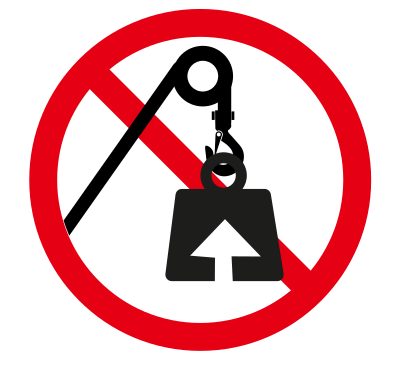
Never Use Winch as a Hoist
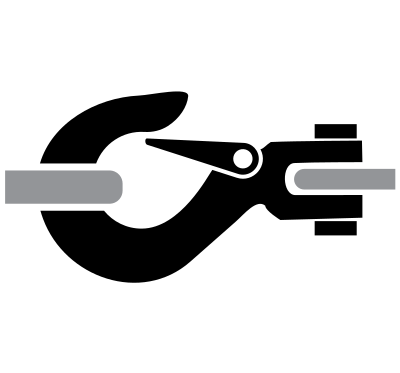
Properly Seat Load in Throat of Hook
Always Wear Leather Gloves
Hand Piercing / Cutting Hazard
4
Winch Basics
▾

You have your WARN winch and you're ready to get out on the trails. This guide provides a basic understanding of your winch and the basics of proper winching techniques. Because no two situations are alike, it would be nearly impossible to review them all. We can, however, provide you with the general principles and techniques.

AlwaysTake time to fully understand your winch and the winching operation by reviewing this guide and the Operator's Guide included with your winch.

Winch Components

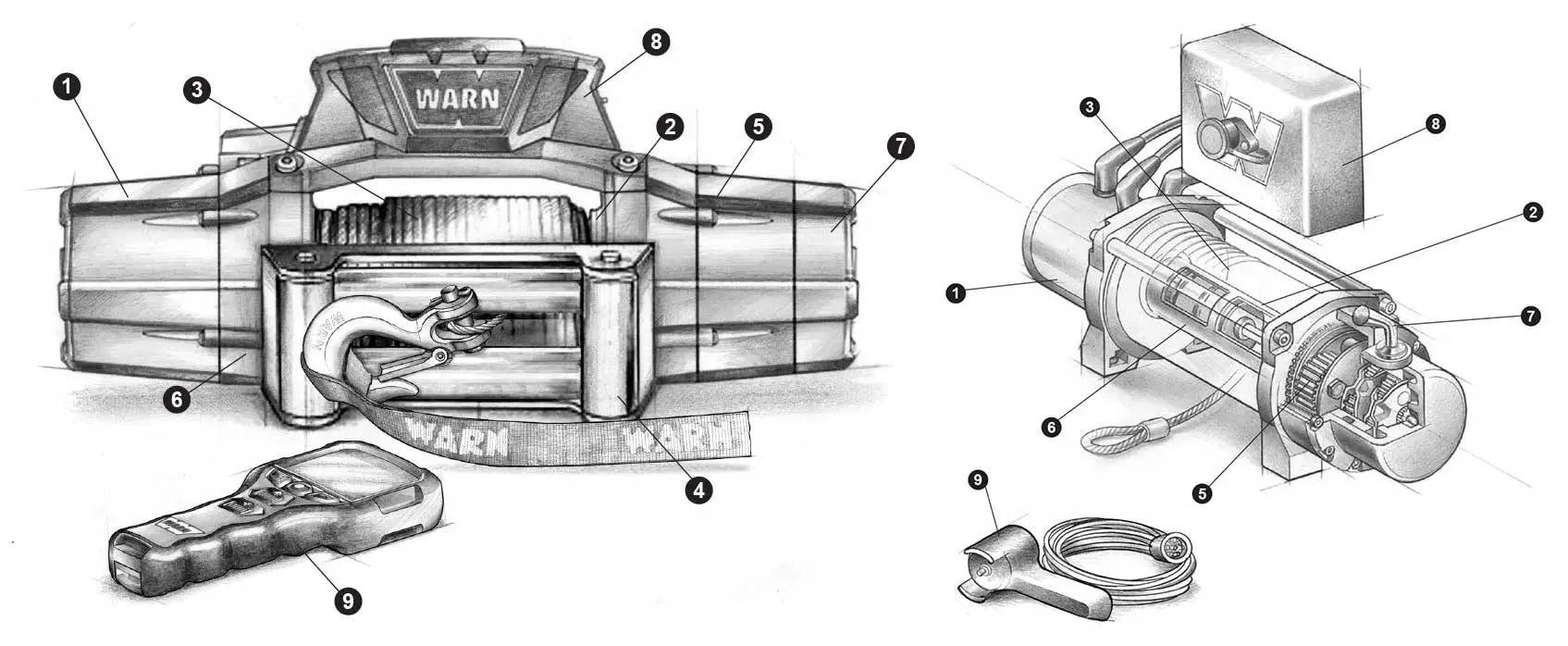
WARN Electric Winch — Front and Cutaway View
1
Motor
Typically powered by the vehicle's battery. Provides power to the gear mechanism, which turns the winch drum and winds the winch rope.
2
Winch Drum
The cylinder onto which the winch rope feeds. Driven by the motor and drive train. Its direction can be changed using the remote control.
3
Winch Rope
Diameter and length determined by the winch's load capacity and design. Wrapped around the winch drum and fed through the fairlead, looped at the end to accept the hook's clevis pin.

Showing 3 of 9 components

!
WarningNever engage or disengage clutch if winch is under load, winch rope is in tension or drum is moving.
10
Winching Hand Signals
▾

In some situations, recovery could involve two people. You and your helper must establish clear and precise hand signals. It should be understood that if the driver controlling the winch cannot see both hands of the assistant, the winch should not be activated.

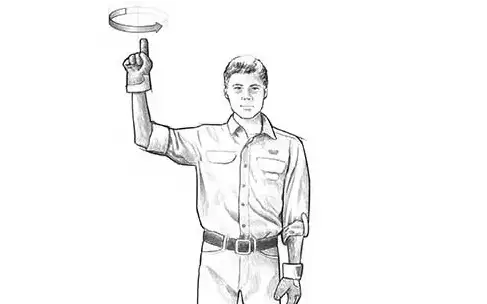
Signal 1: Direction of Steering
Signal 1
Direction of Steering
Hold your arms out with thumbs up and tilt your hands in the direction you advise the driver to steer.
Signal 2: Power In the Winch Rope
Signal 2
Power In the Winch Rope
Hold your forefinger in the air above shoulder height and draw small circles in the air to indicate to wind the winch.
Signal 7: Stop the Winch
Signal 7
Stop the Winch
Clinch fist, palm to driver, held high enough for driver to see and other arm straight out at shoulder height — the signal to stop the winch.

Showing 3 of 7 hand signals

They Said It Was
Impossible.

Y/M/M Fitment — Now for the Core Product

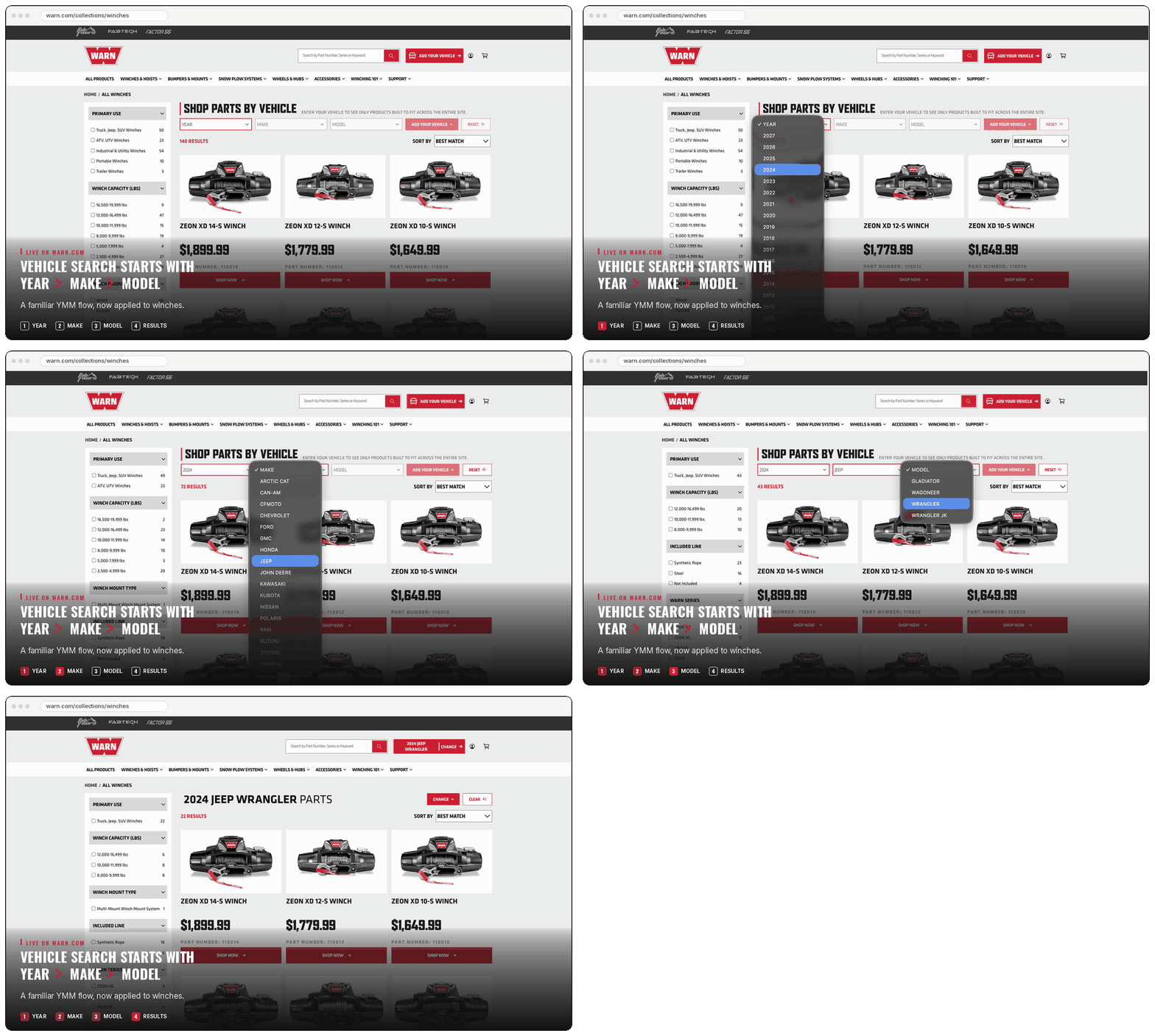
WARN’s old site could match accessories to a customer’s vehicle — but not winches, the actual core product. A winch isn’t rated by make and model, it’s rated by pulling capacity. Real fitment meant knowing what each vehicle actually weighs.

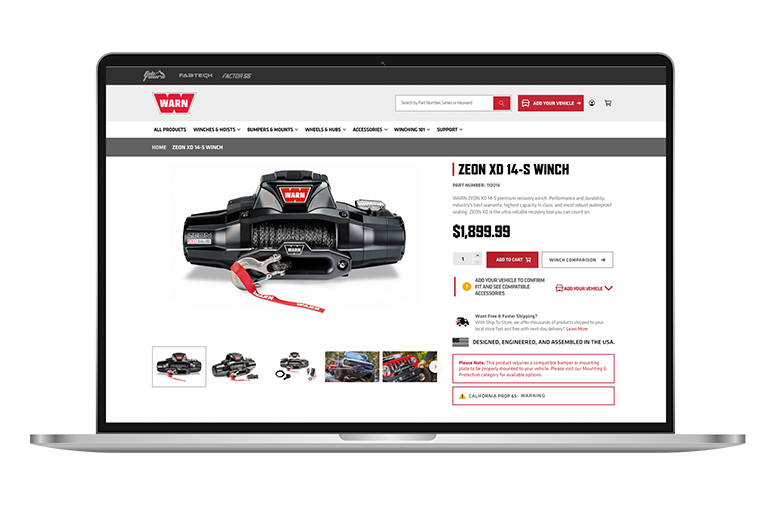
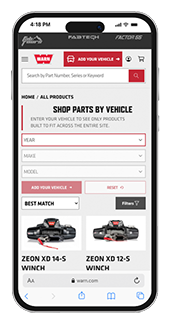
Most agencies weren’t willing to take that on, and even WARN’s own team wasn’t confident it could be solved. We built a vehicle-weight database from scratch, matched it against WARN’s winch capacity specs, and integrated the whole system with Convermax’s Y/M/M search — styled with custom Figma designs so it feels native to warn.com, not bolted onto it.

None of it works without the data underneath holding up. Jess was our day-to-day point of contact with WARN’s team for the full engagement — restructuring PDM data and tagging all 996 products. Max built the fitment engine itself: the vehicle-weight database and the integration layer between Convermax and WARN’s product taxonomy.

The Numbers

Three and a half months, one Shopify install, and a data architecture built to keep scaling long after launch.
996
Products On Site
500+
Literature Entries
15
Know Your Gear Pages
106
Blog Posts Built
52
Pages With New SEO
200
Old URLs Redirected

Built With

Shopify · Convermax Y/M/M · Custom Liquid · Metaobjects · PDM Data Integration · Hash-Based Navigation · SEO Architecture · Vehicle Weight Database · Redirect Management

Frequently Asked Questions

Do you only work with automotive brands?

No — we migrate ecommerce catalogs across every industry, from specialty retail to B2B distribution. Automotive and powersports fitment happens to be one of our deepest specialties, proven on catalogs like WARN Industries’, but the same data-first approach applies whatever you sell.

Will we lose our fitment or product data in the move?

That’s the whole reason we audit your data before touching Shopify. We map every field and relationship — including fitment logic — before migration starts, not after something breaks.

We don’t have a formal PDM, just spreadsheets. Can you still help?

Yes. Most of the catalogs we’ve migrated started as some version of an unwieldy spreadsheet. The audit-and-map process works the same either way.

Will we lose our SEO rankings?

We handle 301 redirect mapping, metadata and schema preservation, sitemap rebuilding, and post-launch monitoring as a standard part of every migration — not an add-on.

How long does a migration like this take?

It depends on catalog size and data complexity. WARN’s 996-product rebuild with a full custom fitment engine took 3.5 months; simpler catalogs move faster.

What if our site has custom features Shopify doesn’t support out of the box?

Between Shopify’s app ecosystem and custom Liquid development, we’ve yet to hit a feature from another platform we couldn’t replicate or improve on.

Ready to Build the Shopify Store That Fits?

We’ll help you migrate to Shopify — or get more out of the Shopify you’re already on — safely, strategically, and without losing a single product, redirect, or ranking.